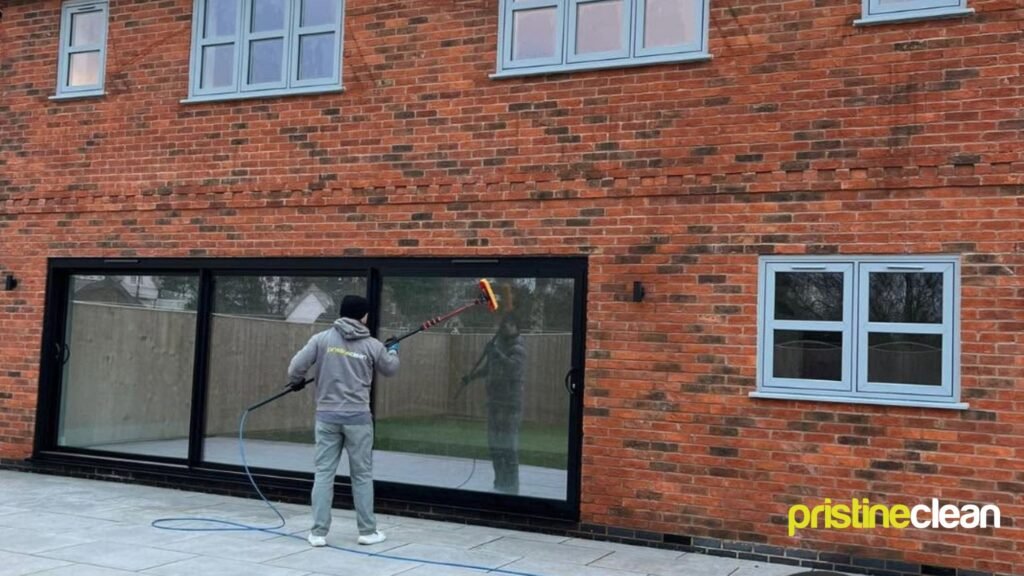
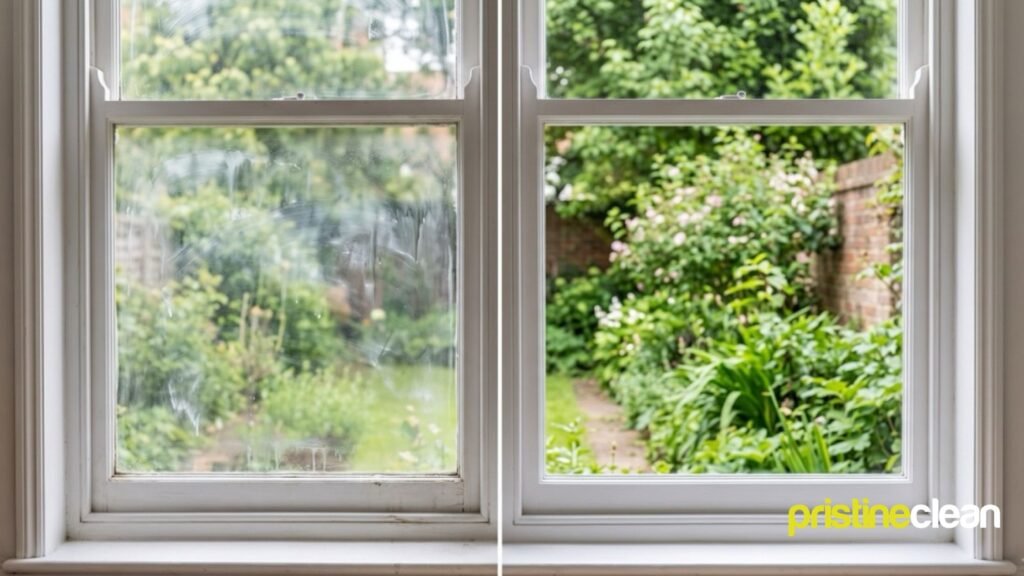
If you’ve ever ended up with streaky windows after cleaning them yourself, you’re not alone. You’ve spent twenty minutes on the windows, stood back to admire the results and — there they are. Streaks. Sometimes it is just a faint haze it might even be a nice proper rainbow-coloured smears that catch every bit of light and somehow the whole window now look worse than before you started. It’s one of those household chores that can genuinely drive you mad, and it happens to almost everyone who attempts it at home.
The thing is, streaky windows aren’t bad luck or a sign you’re doing it completely wrong. They’re almost always down to one of a handful of fixable causes — and once you know what’s actually going on, you can sort it. Here’s what causes streaky windows, what makes the problem worse, and what actually works.
Why Do Windows Streak?
At its simplest, streaks happen when something gets left behind on the glass after cleaning. That something is usually cleaning product residue, dirty water, or minerals from the water itself.
Most household window sprays and glass cleaners leave a thin film on the surface when they dry. If the window isn’t properly rinsed and dried — or if the cloth drags dirt from the window frame back across the glass — that film dries into unsightly streaks. The more product used, the worse the residue build-up tends to be.
Hard water is the other major culprit that stuff that clogs up your kettle with limescale can also ruin your windows with streaks. Thankfully in our cheshire service area we are blessed with softer ware, Phew! Having said that though, all tap water contains dissolved minerals, and when it evaporates on glass it deposits those minerals as water spots or a cloudy film. In hard water areas this is a constant battle — the window looks clean when wet and streaky the moment it dries.
The Most Common Mistakes That Cause Streaky Windows
A dirty microfibre cloth is one of the biggest causes of window smears that people miss entirely. A cloth that hasn’t been properly washed, or one that’s picked up dirt and grime from the window sill or frame before it touches the glass, just moves that dirt back across the surface. Always start with a genuinely clean cloth and rinse it out regularly as you work.
Too much cleaning solution is another issue. It seems logical that more product means a better clean — but excess solution is harder to remove fully, and any residue left behind dries into stubborn streaks. A small amount of properly diluted cleaner does the job far better than a heavy application.
Cleaning in direct sunlight is a surprisingly common mistake. The sun causes the cleaning solution to evaporate faster than you can wipe it away, leaving streaks before you’ve even finished the pane. A cloudy day is genuinely better for window cleaning — and if you need to clean on a sunny day, work on the shaded side of the house first.
Does Cleaning Product Choice Matter?
Yes — significantly. Many supermarket window sprays work reasonably well in theory, but because they’re often applied to dirty window frames and then dragged across the glass, they pick up grime and dry into streaks. The product isn’t always the problem; the technique is.
Traditional window cleaners have long used dish soap — a small amount of washing up liquid diluted in warm water — because it contains a degreaser that cuts through the oily film that builds up on glass over time. Applied sparingly with a clean cloth and properly rinsed off, it produces decent results.
White vinegar diluted with distilled water is a popular DIY cleaning solution that sidesteps the mineral deposit problem — the acidity cuts through grime and the distilled water leaves nothing behind as it dries. It’s a reasonable eco-friendly window cleaning solution for lightly soiled glass. Citric acid in water works on a similar principle and is particularly effective on hard water stains that have built up over time.
Fabric softener diluted heavily in water is occasionally suggested as a window spray — it can reduce static that attracts dust to the glass, though it’s not a substitute for a proper clean.
The Role of Technique
Even with the right cleaning solution, poor technique produces streaky results. A squeegee used in overlapping strokes from top to bottom — wiping the blade clean between each pass — is the most reliable method for removing solution without leaving residue. Working in circles or back-and-forth motions just redistributes the same dirt and cleaning product across the glass.
Edge detailing is where a lot of DIY attempts fall short. Cleaning solution pools at the edges of window panes and along the bottom of the frame, and if it’s not removed before drying it leaves a visible line of residue. Running a dry microfibre cloth around the window frame and sill after the main clean catches any drips before they set.
A window vac — a small handheld vacuum designed to suck up cleaning solution — can help on interior windows, particularly where squeegee technique is difficult or the space is awkward to work in. It removes solution cleanly without smearing and is worth considering for internal glass where a full squeegee setup isn’t practical. For window tracks, a vacuum cleaner with a narrow attachment clears out accumulated dirt and grime before cleaning begins — stopping it from being washed down onto the glass during the clean. However these can be expensive and much cheaper DIY alternatives are avaialable, and often a professional window cleaner is much cheaper than people think.
Why Professional Window Cleaning Gets a Different Result
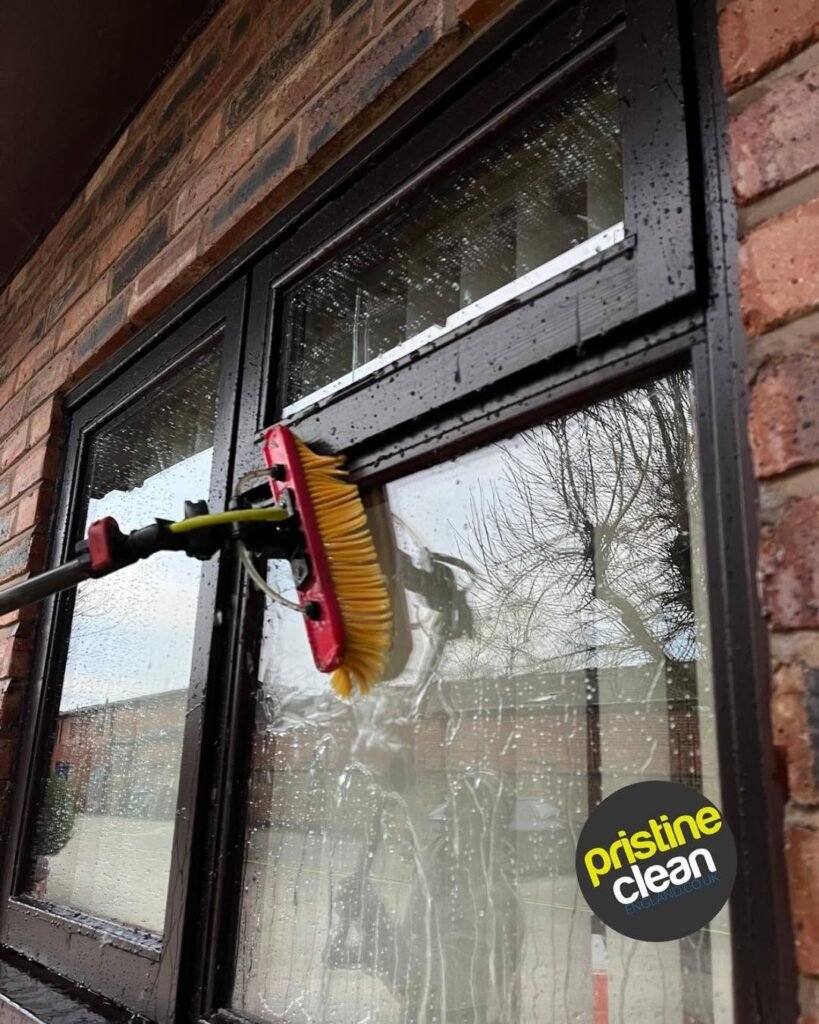
The reason professional window cleaning produces results that DIY window maintenance rarely matches comes down to the water itself. Modern pure water cleaning systems filter tap water to remove all dissolved minerals and impurities before it ever touches the glass. When pure water dries on a window pane it leaves absolutely nothing behind — no minerals, no residue, no streaks.
Combined with a telescopic window cleaning pole and a soft brush that agitates the dirt before rinsing, pure water systems reach glass, frames, sills and hard-to-access areas that simply aren’t achievable with a cloth and window spray from ground level. The glass is rinsed clean and dries to a perfect finish every time.
The difference between a thorough professional cleaning process and a cowboy job that cuts corners is immediately obvious. Anyone who doesn’t fully rinse the glass after brushing, skips edge detailing or rushes through the clean to get to the next job will leave streaks even with professional equipment. A proper job takes the time it takes.
As one of our customers, Fiona, described it after her first professional clean: “Our house had been a building site for two years so the windows were seriously dirty and the team spent an age getting them beautiful again.” Chris, who previously managed a large private estate and used Pristine Clean throughout, summed it up simply: “Always reliable, punctual and discreet — and the cleaning of the windows was always spotless.”
When Is the Best Time to Clean Windows?
Seasonal timing makes more of a difference than most people expect. Direct summer sun is one of the fastest routes to streaky windows — the cleaning solution evaporates before it can be properly removed. A cloudy day, early morning before the sun hits the glass, or late evening all produce better results.
For inside windows, the same applies — cleaning in direct sunlight streaming through the glass makes the job significantly harder and increases the chance of streaks.
Still Getting Streaky Windows? It Might Be Time to Hand It Over
If you’ve tried different cleaning solutions, switched to a clean microfibre cloth, changed your technique and the streaky windows keep coming back — the most likely culprit is your water. Harder water mineral deposits build up progressively on glass and become harder to shift with standard cleaning products over time. A professional clean with a pure water system resets the glass completely, removing the residue build-up that DIY cleaning can’t fully tackle.
If you’re in Northwich or across Cheshire and you’d like streak-free windows without the frustration, get in touch with Pristine Clean for a free quote on our regular window cleaning service.